


A distinctive Shopify store doesn’t have to rely on an off-the-shelf look. Shopify website development can include a custom theme shaped around your brand, products and customer experience, alongside integrations that connect the store with the systems your business uses. The right scope depends on what you need the store to do.
It’s reasonable to want a clear sense of cost before committing, especially when a new store, redesign or update can involve different work. This article explains how theme complexity, integrations and your current store’s condition shape the development scope, so you can understand what goes into an estimate.
Pricing depends on the project scope and is provided after a quote request. Your theme, integrations, store requirements and whether you’re starting fresh or improving an existing store all affect the work involved. We’ll also explain how design and development fit together, what support can include and how to plan a Shopify project around your business goals.
Key Takeaways
- Custom theme work can shape the store’s visual identity and customer experience around your products and business goals.
- Integration requirements influence the project scope by determining how Shopify connects with your business systems.
- A new build, improvements to an existing store and ongoing support call for different development approaches.
- Understanding the work involved in design, integrations and store requirements helps clarify what shapes a project estimate.
Do you offer custom Shopify theme development for unique store designs?
Yes, custom Shopify theme development can create a distinctive online store around your brand, products and customer journey. For Australian businesses, Shopify generally suits an integrated, hosted store, while WooCommerce suits businesses seeking a WordPress-based setup.
Custom store development
Custom Shopify website development covers the design and technical build of your store, from page layouts to interactive features. Web design shapes the visual experience; development implements its functionality. A product page, for example, can bring product details, imagery and purchase options together. The design should also adapt across devices and screen sizes. For a store migration, preserve metadata, optimise site structure and use 301 redirects to help maintain search rankings. A move can cause temporary, minor ranking drops immediately after migration.
Theme customisation options
An off-the-shelf Shopify theme can be customised to better reflect your brand and catalogue. CSS can adjust colours, fonts and layout, while front-end development can change visual elements and customer interactions. This approach can suit a store whose existing theme already supports its core needs. A custom theme involves more tailored design and implementation, so assess the pages, interactions and brand details your store needs before choosing an approach.
Custom functionality
Custom functionality adapts or adds store features to support a specific customer journey. Examples include changing how product options appear, refining navigation for a large catalogue or making key content easier to find. The right scope depends on how each feature serves customers and supports conversion. Map the path from a visitor’s arrival to placing an order, then identify where theme changes or additional development could make it clearer. Test the result across devices before launch.
Third-party app, ERP, accounting and CRM integrations
Integrations connect Shopify with the systems that manage commerce operations and customer information. A well-planned design keeps essential records moving accurately between platforms.
App and system integrations
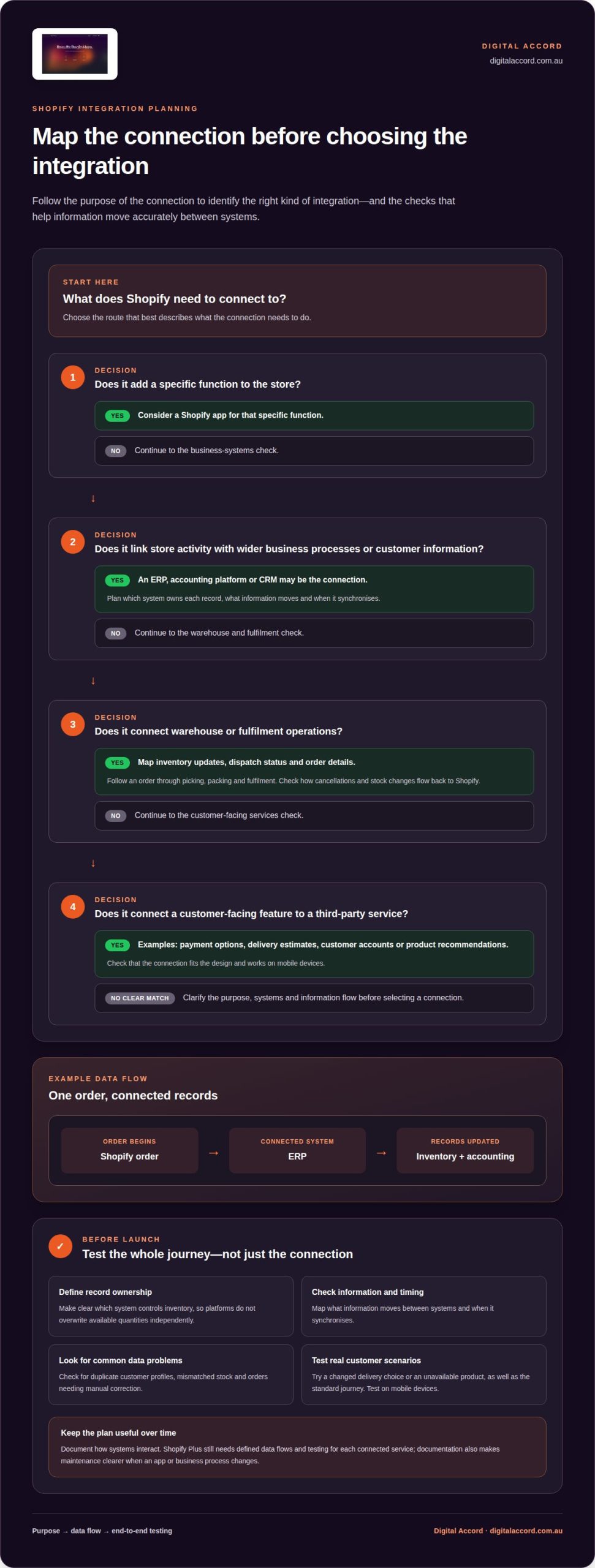
A Shopify app can add a specific function, while an ERP, accounting platform or CRM connects store activity with wider business processes. For example, an order can flow from Shopify into an ERP, then update inventory and accounting records. Integration planning should map which system owns each record, what information moves and when it synchronises. This helps prevent duplicate customer profiles, mismatched stock and orders that need manual correction.
Warehouse and fulfilment connections need particular attention to inventory updates, dispatch status and order details. A practical integration plan follows an order from checkout through picking, packing and fulfilment, then checks how cancellations or stock changes flow back to Shopify. Make clear which system controls inventory, so two platforms don’t overwrite available quantities independently.
Front-end and service connections
Front-end integrations connect customer-facing store features with third-party services. Examples include payment options at checkout, delivery estimates, customer account tools and product recommendations. Each connection should fit the store’s design and work smoothly on mobile devices. Test the full customer journey, including an order with a changed delivery choice or an unavailable product, rather than only checking that a service appears on the page.
Shopify Plus doesn’t remove the need to define data flows and test each connected service. Documenting how systems interact also makes ongoing maintenance clearer when an app or business process changes. For help with wider operational technology, explore IT managed services.
New builds, existing-store improvements and hybrid support
A project can begin with a new store, targeted improvements or a combination of both. The right approach depends on your store’s purpose, audience, features and technical requirements.
Build and support options
A new build covers planning and creating an online store. Work on an existing store can focus on performance, themes or specific customer journeys. Hybrid support combines development with ongoing assistance for updates and technical issues. A typical Shopify store build in Australia takes six to ten weeks from a completed brief to launch. Larger ecommerce operations also need architecture that can handle connected systems and growing traffic.
Development packages
Package scope can help clarify what a project includes. The Bespoke Design Shopify package includes up to 20 uniquely designed pages, while the Shopify Plus package includes 10 unique page designs. The Startup Shopify package includes three months of post-launch support for minor updates and bug fixes. Shopify Plus includes four months of post-launch support, including technical consulting and maintenance. Compare page scope and support against your store’s priorities.
Consultation and store strategy
Strategy defines the store’s purpose, target audience and required features before development begins. For an established brand, this can mean mapping current customer journeys and identifying where shopping becomes difficult. For a new store, it means defining the catalogue structure and essential functionality first. This planning aligns design, integrations and performance needs with business operations, rather than treating them as separate decisions.
Store setup essentials
Shopify website development can include store structure, theme implementation, payment and shipping configuration, and search optimisation. Australian configurations should account for GST, ABN and Australian Consumer Law requirements. Privacy and customer-data handling should also guide how the store collects and uses information.
Useful payment options matter at checkout. According to the Reserve Bank of Australia, Australian online shoppers use cards, internet banking, BPAY, digital wallets and buy-now-pay-later services. The options your store needs depend on its products, customers and fulfilment process.
Shopify website development pricing
In Australia, a Shopify project’s price depends on its scope and is provided after a quote request. To assess an estimate, understand which design, development and support tasks it covers.
Development pricing
A theme adjustment differs from a new store build with bespoke design, custom functionality and several system integrations. An agency scopes work around the number and complexity of templates, required features, data migration and testing. For example, adapting an existing product page is a different task from creating a new catalogue structure and connecting order data to business software.
Ask for a clear breakdown of deliverables, dependencies and launch testing. A useful estimate explains what development covers and how changes to the brief affect the work. Shopify stores with complex workflows may need more planning and integration testing than stores using standard features. These requirements, rather than a single generic rate, shape the project scope.
Risks and maintenance costs
Common risks include app conflicts, broken theme functionality after changes, inaccurate inventory synchronisation and checkout issues. Testing key customer journeys, such as selecting a product and completing an order, can identify faults before launch. After release, maintenance can include performance monitoring, technical fixes, security updates and patches.
Ongoing support costs depend on the work included, such as monitoring, troubleshooting or minor updates. Changes to an app or theme can also affect connected features, so maintenance planning should account for those dependencies. A clear estimate separates initial development from ongoing tasks and explains how each supports reliable store operations.
For a project estimate based on your store’s requirements, request a development quote.
Digital Accord: Website Design & Development
Digital Accord can help turn your Shopify requirements into a practical website design and development project. Bring a new-store brief, a theme that needs refinement or a list of integrations and functionality requirements. The project can then be shaped around your catalogue, customer journey and business priorities, with the scope reflecting the work involved.
For an existing store, development can focus on specific improvements rather than replacing everything. For a new build, design and technical implementation can come together from the outset. Digital Accord also offers Google Advertising and social media services to support a broader digital marketing approach alongside your store.
To discuss your Shopify project, contact Digital Accord.
Plan your store’s next stage
Think beyond launch: your store should be able to evolve as your products, customer expectations and business priorities change. A clear development roadmap helps you decide which improvements matter now and which can wait, keeping the next phase focused on business needs rather than features for their own sake.
Shopify website development can also form part of a broader digital plan. Digital Accord offers Website Design & Development alongside Google Advertising and Social Media Management, helping businesses connect their online store with wider customer acquisition and engagement activity.
Ready to discuss what your store needs next? Contact Digital Accord about your Shopify store. A considered next step can give your store a stronger foundation for what comes next.
Frequently Asked Questions
How much does a Shopify developer cost in Australia?
The price depends on the project scope and is provided after a quote request. Key factors include custom design, functionality, integrations, migration and support. For Shopify website development, a useful estimate separates tasks such as theme work and testing, so you can see what the proposed work covers. Clarify whether content preparation and launch support are included in the scope.
Can you integrate third-party tools like CRMs, ERPs, or inventory systems?
Yes, Shopify can connect with CRM, ERP and inventory systems. For example, an order can pass to an ERP with its product SKUs, quantities and customer details, while stock updates return to the online store. Integration planning should map which system sends and receives each type of data, including how errors or duplicate records are handled, to reduce manual reconciliation.
How Dedicated Shopify Developers Handle Complex Requirements for Enterprise Stores?
Dedicated Shopify developers handle complex requirements by documenting workflows, system connections and business rules before implementation. An enterprise store might need regional catalogues, customer account permissions and order approvals to work together. Developers can map these processes and test how each workflow responds when information is missing or an order needs correction, helping ensure the system supports business operations.
What does Shopify store development cost in Australia?
The total cost varies with the work required, including distinct page layouts, custom features, integrations and migration tasks. Shopify website development for a store with prepared product content and straightforward workflows has a different scope from a project requiring bespoke design and complex connections. Ask for an estimate that identifies deliverables, assumptions and how requested changes could affect the agreed scope.
What are typical Shopify developer hourly rates in Australia?
There isn’t one hourly rate that defines Shopify development costs across Australia. Rates depend on the work and how it’s scoped, and an hourly figure alone won’t show the project total. For a practical comparison, consider the tasks covered, estimated effort, testing responsibilities and whether post-launch changes are included.
How do you choose a Shopify website developer in Australia?
Choose a developer whose process addresses your store’s requirements, from theme changes to connected business systems. Look for a clear scope, defined deliverables, a testing approach and an explanation of how changes are managed. For Brisbane businesses, Digital Accord is based in Brendale and provides Website Design & Development. Contact the team to discuss your Shopify project.